Country:
Region:
Municipality:
Owner:
Altitude:
Genetic Varieties:
Processing Method:
Total Production Area:
In Santa Teresa, José Osman Martínez has spent more than a decade turning challenges into opportunity. He began producing coffee in 2010 with just half a hectare, harvesting 11 60kg bags of green coffee. Limited experience, climatic challenges, and unsuitable varieties made those early years difficult, but José continued to invest in his farm and improve his approach to production.
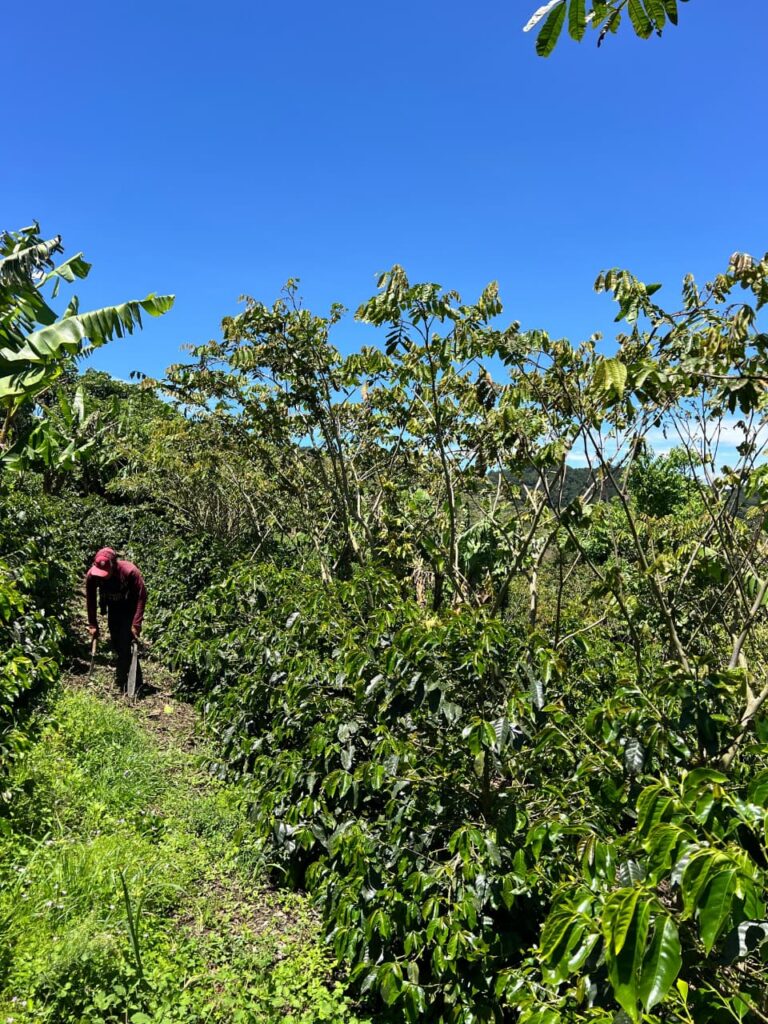
Today, José manages Finca La Arada, 2.8 hectares of productive land. His farm is planted with Anacafé 14, Ihcafe-90, Lempira, and Parainema varieties, grown within an agroforestry system that incorporates Inga trees to support healthy cherry development and coffee quality. For the 2024–2025 crop, he projected production of 115 60kg bags of green coffee.
After harvesting, José transports his coffee cherries to his own wet mill, where he carefully separates lots and selectively picks ripe cherries. Coffee is fermented for 12 to 18 hours before being washed and sun-dried on patios for 8 to 10 days. Driven by a forward-thinking mindset, José has embraced innovation in coffee preparation and quality control.
Through his work with Becamo, José has received recognition and incentives for quality production, helping reinforce his investment in improved practices and processing. His ambition extends beyond his own farm: he hopes to achieve better prices for his coffee while encouraging fellow producers in the EACP Santa Teresa to add value to their production and demonstrate the quality potential of the region.
Beneficio de Café Montecristo SA (Becamo S.A.) was founded in 1983 by Emilio R. Medina and, in 1989, became a member of Neumann Kaffee Gruppe (NKG). Thanks to successful local relationships and support provided by NKG, it has rapidly expanded. Becamo currently has operations spanning Honduras’ most important coffee regions in the West (Copán, Lempira, Intibucá, Ocotepeque, Santa Bárbara, Paraiso, Olancho), Center (Comayagua, La Paz, Yoro, Francisco Morazán) and East (Olancho and El Paraíso).
Becamo has been working closely with smallholder coffee farmers for decades, always with an eye towards supporting sustainability. Their work came into acute focus in 2015, in the wake of the rust crisis, a program called Recuperando Mi Cafetal (Recovering My Coffee Fields). As national production swiftly fell by about 25%, causing significant income and employment losses for coffee-growing communities, Becamo began breeding and proliferating rust-resistent and otherwise resilient coffee varietals for farm renovation across the country.
RMC’s overwhelming success was due in large part to Ecopil technology — seedlings grown in biodegradable, organic substrate versus traditional plastic pots. This technology dramatically speeds seedling development rates and increases the health and vigor of the root systems. Additionally, these small plugs take up less space in vehicles and can be planted directly into the ground, greatly increasing efficiency at volume.
Ecopil, Becamo’s WCR Verified nursery, and their Unit for Sustainable Services (a field team dedicated to providing educational and infrastructural support to producers) have facilitated huge impact for smallholders across the country and built a strong foundation for sustainable green coffee production in Honduras.