Country:
Region:
Municipality:
Owner:
Altitude:
Genetic Varieties:
Processing Method:
Total Production Area:
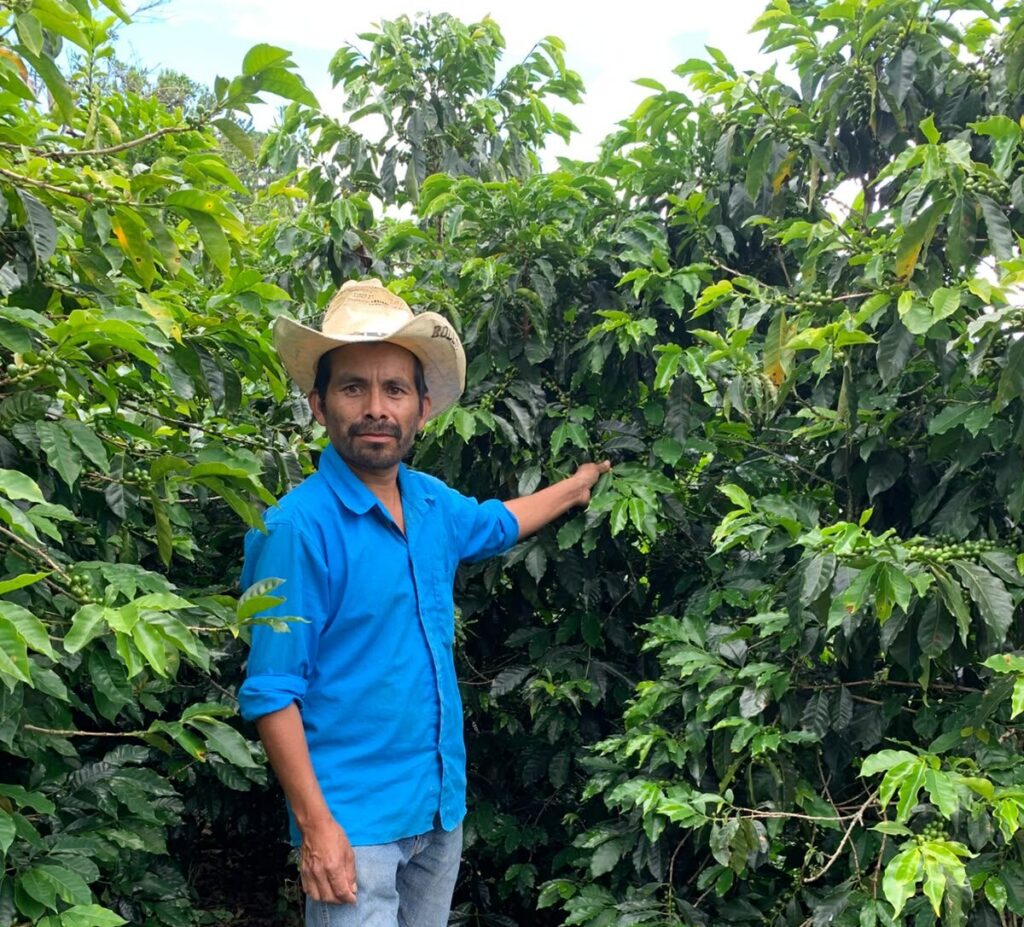
José Eusebio Aguilar Rodriguez was a sustenance farmer before he became a coffee producer. He and his wife produced corn and beans in San Andres, Lempira, supplementing their income as seasonal coffee harvesters in other regions of Honduras.
In 2017 they established their first coffee plot, Los Manzanos, planting seeds they brought from Lepaera, Lempira. Over time, they grew from .32 hectares to 4.2 hectares, and today, Eusebio is a leading producer in his community.
Much of Eusebio’s success is due to his commitment to quality and innovation. Working closely with NKG Exporter Becamo and their field team, Eusebio and his family have managed to increase farm productivity and coffee quality, as well as diversify their processing techniques. Trainings in agronomic practices, leadership, labor standards, and specialty coffee production have meant increased premiums for his coffee, enabling Eusebio to improve farm infrastructure, purchase a vehicle, upgrade his home, and invest in farm expansion and renovation.
Beneficio de Café Montecristo SA (Becamo S.A.) was founded in 1983 by Emilio R. Medina and, in 1989, became a member of Neumann Kaffee Gruppe (NKG). Thanks to successful local relationships and support provided by NKG, it has rapidly expanded. Becamo currently has operations spanning Honduras’ most important coffee regions in the West (Copán, Lempira, Intibucá, Ocotepeque, Santa Bárbara, Paraiso, Olancho), Center (Comayagua, La Paz, Yoro, Francisco Morazán) and East (Olancho and El Paraíso).
Becamo has been working closely with smallholder coffee farmers for decades, always with an eye towards supporting sustainability. Their work came into acute focus in 2015, in the wake of the rust crisis, a program called Recuperando Mi Cafetal (Recovering My Coffee Fields). As national production swiftly fell by about 25%, causing significant income and employment losses for coffee-growing communities, Becamo began breeding and proliferating rust-resistent and otherwise resilient coffee varietals for farm renovation across the country.
RMC’s overwhelming success was due in large part to Ecopil technology — seedlings grown in biodegradable, organic substrate versus traditional plastic pots. This technology dramatically speeds seedling development rates and increases the health and vigor of the root systems. Additionally, these small plugs take up less space in vehicles and can be planted directly into the ground, greatly increasing efficiency at volume.
Ecopil, Becamo’s WCR Verified nursery, and their Unit for Sustainable Services (a field team dedicated to providing educational and infrastructural support to producers) have facilitated huge impact for smallholders across the country and built a strong foundation for sustainable green coffee production in Honduras.